Bigfoot Evidence Collection Procedure – Field Guide
$29.88
$52.89
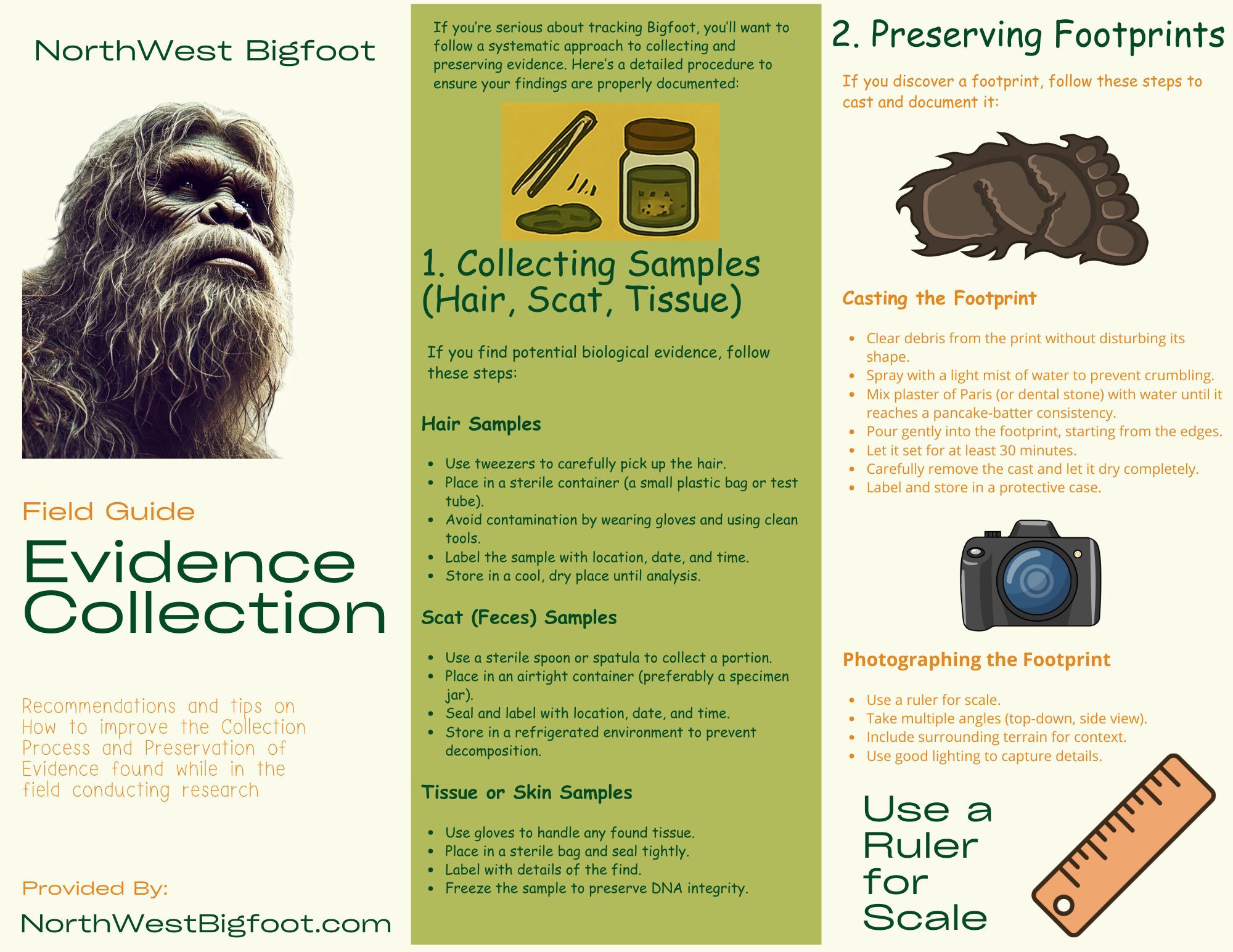
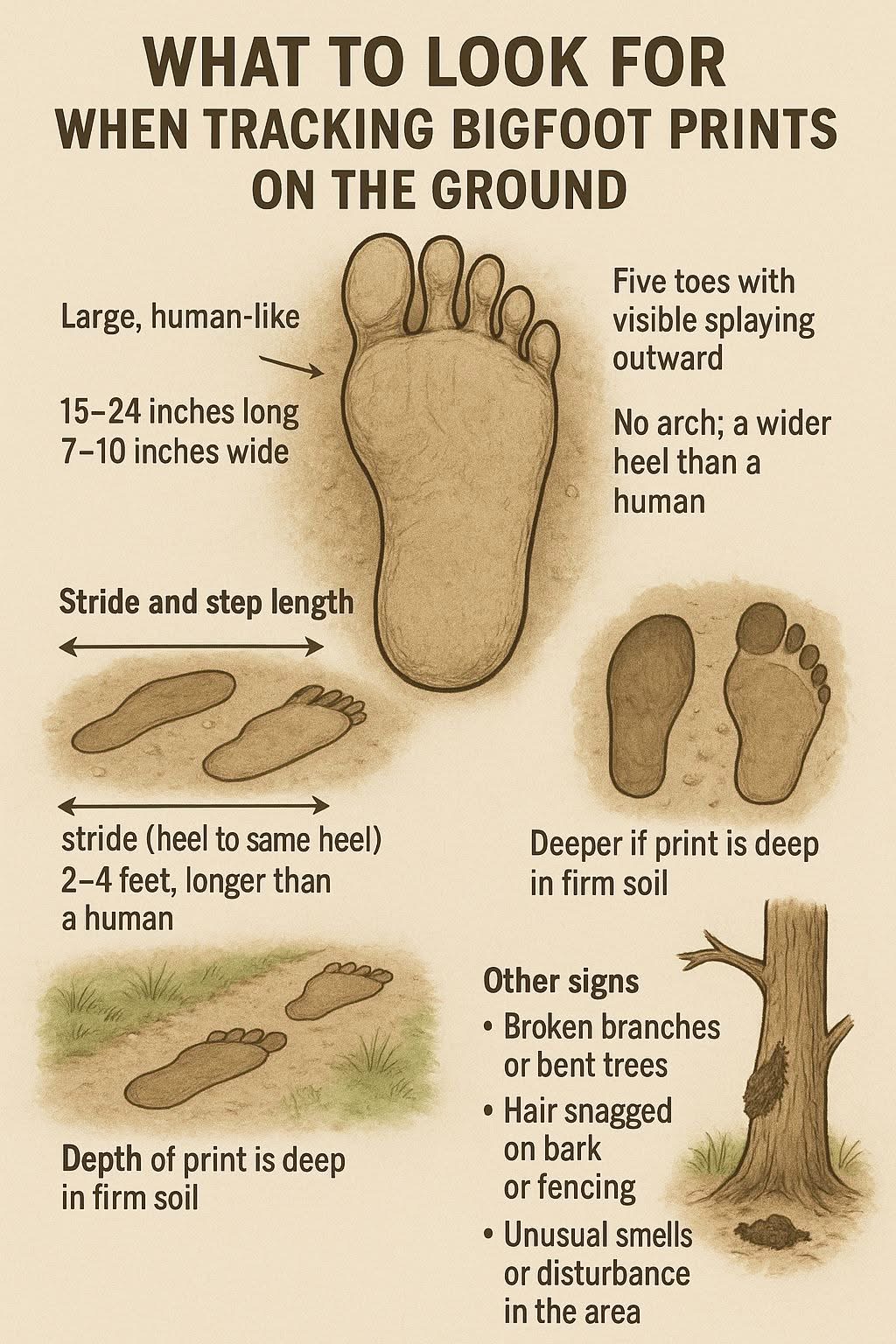
Bigfoot Evidence Collection Procedure – Field Guide If you’re serious about tracking Bigfoot, you’ll want to follow a systematic approach to collecting and preserving evidence. Here’s a detailed procedure to ensure your findings are properly documented: 1. Collecting Samples (Hair, Scat, Tissue) If you find potential biological evidence, follow these steps: Hair Samples Use tweezers to carefully pick up the hair. Place in a sterile container (a small plastic bag or test tube). Avoid contamination by wearing gloves and using clean tools. Label the sample with location, date, and time. Store in a cool, dry place until analysis. Scat (Feces) Samples Use a sterile spoon or spatula to collect a portion. Place in an airtight container (preferably a specimen jar). Seal and label with location, date, and time. Store in a refrigerated environment to prevent decomposition. Tissue or Skin Samples Use gloves to handle any found tissue. Place in a sterile bag and seal tightly. Label with details of the find. Freeze the sample to preserve DNA integrity. 2. Preserving Footprints If you discover a footprint, follow these steps to cast and document it: Casting the Footprint Clear debris from the print without disturbing its shape. Spray with a light mist of water to prevent crumbling. Mix plaster of Paris (or dental stone) with water until it reaches a pancake-batter consistency. Pour gently into the footprint, starting from the edges. Let it set for at least 30 minutes. Carefully remove the cast and let it dry completely. Label and store in a protective case. Photographing the Footprint Use a ruler for scale. Take multiple angles (top-down, side view). Include surrounding terrain for context. Use good lighting to capture details. 3. Documenting Evidence Proper documentation ensures credibility: Field Notes Record location, time, and weather conditions. Describe the evidence in detail. Note any unusual sounds or smells. Photographic Evidence Use a high-resolution camera. Take close-ups and wide shots. Include reference objects for scale. Audio Recordings Capture vocalizations if heard. Use a directional microphone for clarity. Note time and location of recordings. Video Documentation Record the area thoroughly. Use a tripod for stability. Narrate findings for context. 4. Storing and Analyzing Evidence Maintain a digital and physical log of all findings. Keep all samples in a secure, climate-controlled environment. Send biological samples to a lab for DNA analysis. RELATED Information: Bigfoot Evidence Collection Form